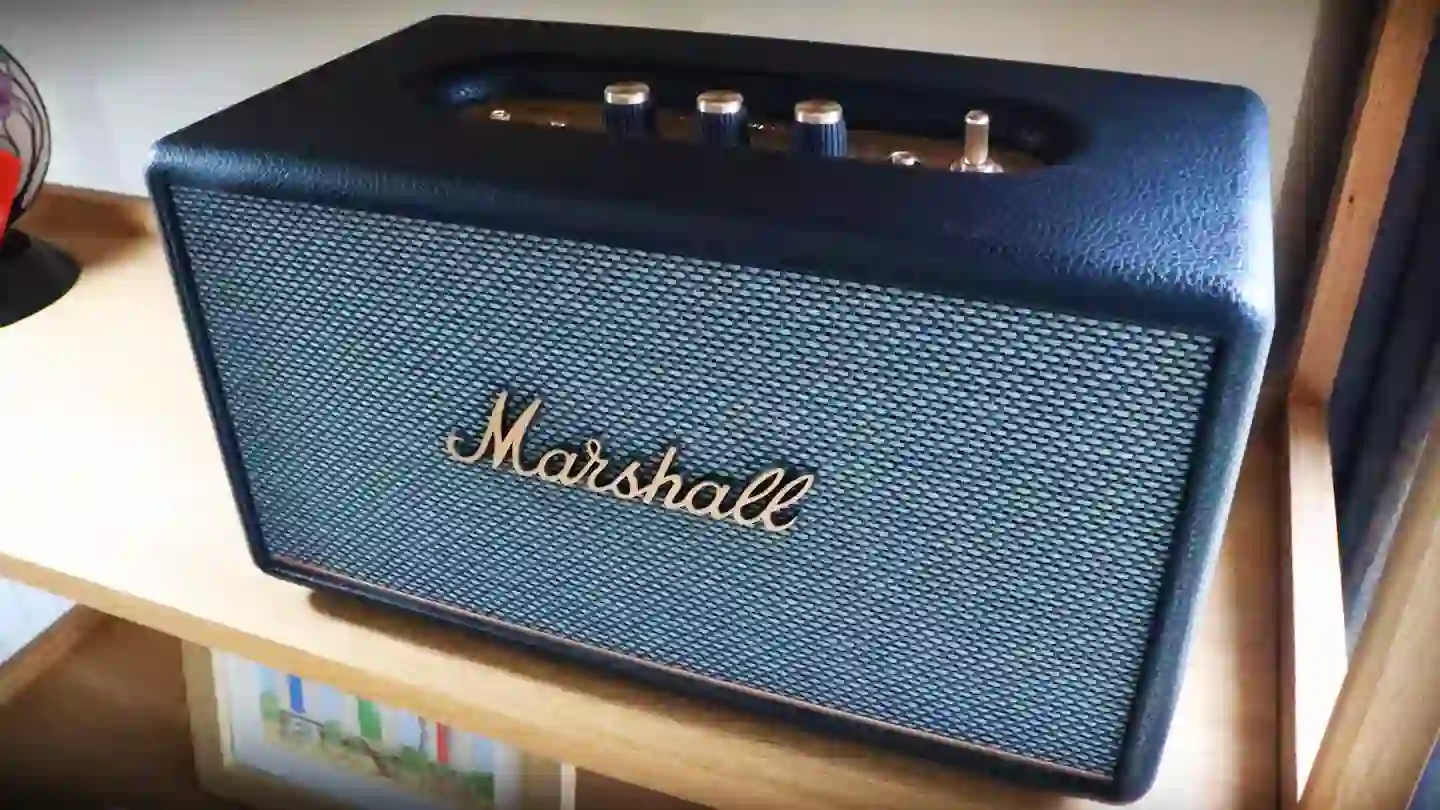
The Marshall Stanmore III combines powerful, music-focused sound with classic amplifier styling, making it an appealing choice for listeners who want more than an ordinary Bluetooth speaker. With punchy bass, clear vocals, physical sound controls, and RCA connectivity for turntables, it offers a straightforward home listening experience. However, as a speaker originally released in 2022, is the Marshall Stanmore III still worth buying in 2026, especially when newer alternatives offer Wi-Fi streaming, smart features, and greater connectivity?
The Stanmore III is particularly attractive for rock, pop, and hip-hop listeners who appreciate energetic sound and vintage design. Its Bluetooth 5.2 connectivity, adjustable bass and treble controls, and room placement compensation add everyday convenience. However, the lack of Wi-Fi, HDMI ARC, and a built-in battery makes it less suitable for multiroom audio, modern TV setups, or portable listening.
The buying decision comes down to sound preferences, connectivity needs, and price. In this Marshall Stanmore III review, we examine its sound performance, bass response, design, connectivity, and practical limitations using published specifications and reviewer feedback. We also compare it with competing speakers and explain whether its features and current market positioning make it a worthwhile purchase in 2026..
Marshall Stanmore III Review: Quick Verdict
Best For
Music lovers who want powerful, energetic sound, premium retro styling, and physical bass, treble, and volume controls. Particularly appealing for rock, pop, and hip-hop listeners, vinyl enthusiasts, and buyers seeking a stylish home speaker without complicated setup.
Not Ideal For
Buyers who need Wi-Fi streaming, multiroom audio, HDMI ARC, or battery-powered portability. It is also less suitable for listeners who prioritize a wide stereo soundstage, neutral studio-style sound, or maximum volume without compression.
Top Strengths
- Rich, engaging sound: Punchy bass, prominent vocals, and lively instrument reproduction make everyday music listening enjoyable.
- Iconic Marshall design: Vintage amplifier styling, premium-looking finishes, and tactile controls distinguish it from conventional Bluetooth speakers.
- Flexible wired connectivity: Bluetooth 5.2, RCA, and 3.5 mm AUX inputs accommodate phones, turntables with a phono preamp, and other audio sources.
- Room-friendly sound adjustments: Physical bass and treble knobs, combined with app-based placement compensation, make tuning straightforward.
Biggest Weaknesses
- No Wi-Fi, HDMI ARC, or built-in battery.
- Stereo separation is limited compared with a traditional two-speaker setup.
- High-volume compression and distortion may reduce sound quality when pushed to its limits.
- Premium pricing makes it less attractive for buyers who prioritize features and performance over design.
Bottom Line: Is the Marshall Stanmore III Worth Buying in 2026?
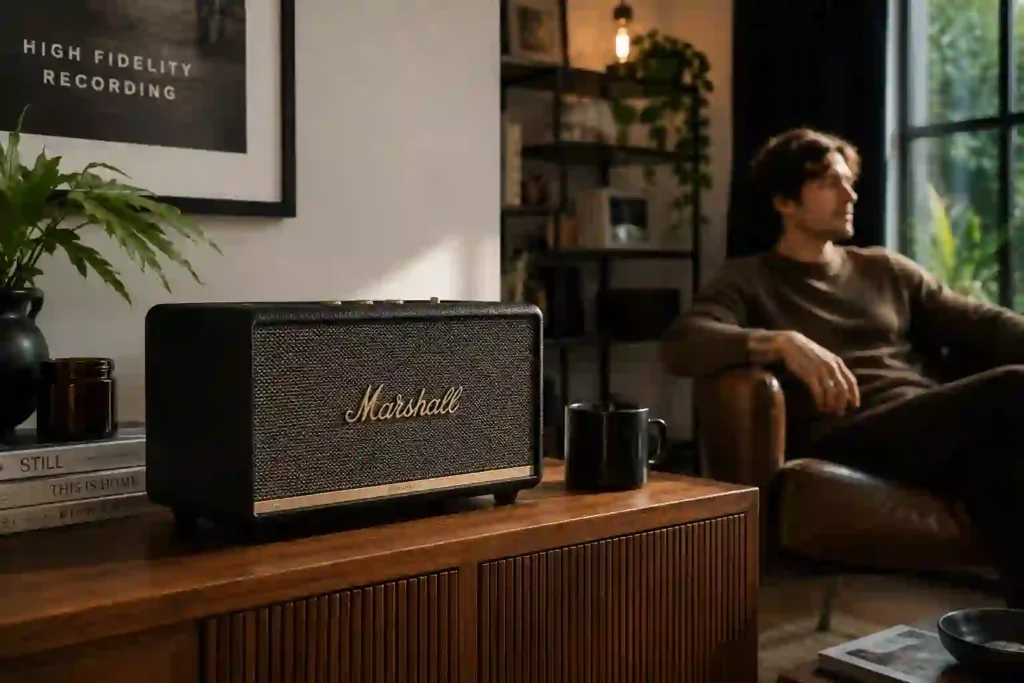
The Marshall Stanmore III is worth considering if music quality, classic design, and hands-on controls matter more to you than smart features. Its punchy bass, expressive midrange, and convenient analog inputs make it an appealing home speaker, especially for rock, pop, and vinyl listening.
However, its biggest drawback is value. As a speaker originally released in 2022, it faces competition from newer models offering Wi-Fi, broader streaming capabilities, and more flexible connectivity. Its single-cabinet design also cannot provide the same stereo separation as two properly positioned speakers.
Our recommendation: Choose the Stanmore III if you want a stylish, music-first home speaker and can find it at a competitive price. If multiroom streaming, TV integration, or maximum performance per rupee matters more, compare current alternatives before buying..
Review methodology: This is a research-basedStanmore III review using OEM published specifications, professional testing, and verified owner feedback. We did not personally test this speaker.
Product Overview
The Marshall Stanmore III review covers a powered Bluetooth stereo speaker released for the home in 2022. The unit blends retro amp styling with modern Bluetooth 5.2 streaming physical bass treble and volume knobs and analog RCA and 3.5 millimeter inputs. Market positioning places it between smaller and larger Marshall models as a bookshelf friendly but room filling two channel option. The intended audience is music lovers who appreciate tactile controls turntable compatibility and a sound signature tuned for impact rather than studio neutrality.
Marshall Stanmore III Specifications
| Product name | Marshall Stanmore III |
|---|---|
| Category | Powered Bluetooth home speaker stereo |
| Release year | 2022 |
| Channels | Stereo 2.0 |
| Total output power | 80 |
| Driver configuration | One mid woofer and two tweeters |
| Connectivity | Bluetooth 5.2 RCA stereo input 3.5 mm Aux |
| Wi Fi | Not supported |
| HDMI ARC | Not supported |
| Dimensions | 350 × 203 × 188 mm |
| Weight | Approximately 4.25 kg |
| Power | Mains powered only |
Why These Specifications Matter?
Stereo two channel output and the driver layout make music lively and vocals prominent. Bluetooth 5.2 gives modern wireless pairing and stability which matters for casual streaming from phones and tablets. The presence of RCA and Aux inputs matters for anyone wanting to hook up a turntable or older source without needing adapters. The lack of Wi Fi and HDMI constrains use for smart multiroom setups and direct TV HDMI hookup so plan the role for this speaker as a music first home unit rather than a multiroom cinema hub.
Key Features Explained
Physical Bass Treble and Volume Knobs
The top mounted knobs let immediate adjustments without opening an app. That tactile control is useful when moving the speaker to different rooms or when switching between content like bass heavy tracks and vocal driven songs. The knobs benefit users who prefer quick analog style tweaks and who enjoy hands on interaction with audio. The limitation is that these knobs control broad tonal balance rather than precise parametric equalization so they suit musical adjustments rather than studio grade correction.
App Based Tuning and Placement Compensation
The app provides placement compensation and firmware updates. Placement compensation helps tailor tonal balance to room position for example tightening bass when the speaker sits against a wall or reducing boom in small rooms. This matters because room interaction has an outsized effect on perceived bass and overall clarity. Users who like to fine tune will appreciate the app but app details and deeper settings were not fully enumerated in this Marshall Stanmore III review.
Bluetooth 5.2 Wireless Connectivity
Bluetooth 5.2 enables modern pairing with two host devices and generally stable streaming. This is convenient for households where multiple phones or tablets will connect. Codec support showed inconsistent third party reporting so exact codecs were not confirmed in this Marshall Stanmore III review. The practical takeaway is that Bluetooth will be reliable for general use but users wanting verified high resolution Bluetooth codecs should confirm official specifications before purchase.
RCA and 3.5 Millimeter Analog Inputs
Analog inputs are a major practical advantage for those with turntables CD players or TVs that offer line outputs. Being able to plug a turntable with a phono preamp directly into the speaker is a simple path to vinyl playback. This benefits users who have legacy gear and want a single speaker to handle wired and wireless sources. The limitation is there is no HDMI input so TV connection via analog outputs or external adapters will be required for some setups.
Design and Build Quality
This Marshall Stanmore III review highlights a design that leans into classic Marshall amp cues. The exterior uses grill cloth and brass style control accents giving it a vintage aesthetic while a modern build feeling keeps it sturdy. Color options include black cream and brown which helps it pair with different decors. The cabinet is solid and the metal style knobs are tactile which improves everyday usability. Placement considerations include leaving clearance for the rear bass reflex port to avoid bass loading. Durability impressions from reviewers indicate a premium daily use feel though long term ownership data was not documented in the materials used for this Marshall Stanmore III.
Setup and Installation
Setup is straightforward and fast, check the offical Marshall Stanmore III manual. Plugging the speaker into mains choosing Bluetooth or analog input and adjusting the knobs will get the speaker working in minutes. Bluetooth pairing via the Bluetooth 5.2 link is described as simple and multi host pairing is supported which is convenient when several household devices will connect. The app provides placement compensation and can deliver firmware updates though exact app steps were not specified here. Setup limitations include the lack of HDMI and Wi Fi which restricts certain TV and network streaming configurations.
Real World Performance
Movies and TV
In this Marshall Stanmore III is capable of delivering movie music and effects with clear highs and strong mids. Dialogue clarity is acceptable when using analog RCA or 3.5 millimeter line outputs. However the lack of HDMI ARC means convenient TV hookup is not available and additional adapters may be needed. At very high volume the speaker can exhibit pumping and distortion so be careful with very loud movie use.
Music Listening
Music is the area where the Marshall Stanmore III shine. Vocals are rich and present and the midrange offers good instrument separation for common pop and rock material. Bass is deep and punchy for the cabinet size providing satisfying impact for hip hop and upbeat tracks though it is not a substitute for a dedicated subwoofer. The overall tuning favors an energetic engaging sound rather than a neutral analytical response which suits casual listeners and music fans who prefer immediacy.
Gaming
There was no specific gaming testing in the materials used for this Marshall Stanmore III. As a stereo Bluetooth speaker it should add immersion for casual gaming through loudness and bass but precise latency and positional audio performance were not evaluated. Competitive gamers who need low latency or surround cues should verify latency performance before using the speaker as a primary gaming output.
Voice Content and Podcasts
For spoken word content the Stanmore III provides adequate presence and clarity when connected via analog inputs. The strong midrange helps vocals cut through but the lack of a built in microphone means the speaker cannot handle voice assistant or hands free call roles on its own.
Amazon Customer Marshall Stanmore III Review Rating
| Stars (4.6/5) | Review (849 global ratings) |
| 5 Star | 86% |
| 4 Star | 6% |
| 3 Star | 2% |
| 2 Star | 1% |
| 1 Star | 5% |
Date: 11th Oct 2026
Why Users Are Giving 4 and 5-Star Reviews
Most buyers are extremely satisfied with the Marshall Stanmore III because it combines premium sound quality with a timeless retro design. We found that users repeatedly praise its rich, room-filling audio, describing the sound as warm, detailed, and powerful without becoming harsh. Whether listening to rock, jazz, classical music, podcasts, or modern pop, customers say the speaker delivers excellent clarity and instrument separation.
Another major reason for the high ratings is its premium build quality. Buyers love the vintage Marshall styling, tactile control knobs, and solid construction that make it look as good as it sounds. Many mention that it becomes an attractive centerpiece in a living room, bedroom, or office.
Ease of use also receives consistent praise. Bluetooth pairing is quick, setup takes only a few minutes, and the Marshall app is simple enough for firmware updates and basic sound adjustments. Users also appreciate the AUX input, lack of unnecessary smart assistants, and reliable wired power. Overall, customers feel the Stanmore III offers a true hi-fi listening experience that easily justifies its premium reputation.
Why Users Are Giving Below 3-Star Reviews
Most lower-rated reviews are based on expectations rather than major defects. We found that some buyers feel the Marshall Stanmore III is expensive compared to competing home speakers, making the premium price difficult to justify unless you value its iconic design and brand appeal.
A few users expected a wider stereo soundstage or deeper bass than the speaker actually delivers. While most agree the audio is clean and powerful, some believe larger speakers offer better room-filling performance for the same budget. Others also mention that maximum volume could be higher for large parties or open spaces.
Connectivity limitations are another complaint. Since the Stanmore III is a plug-in home speaker, some buyers are disappointed that it has no built-in battery for portable use. A handful of users also report occasional Bluetooth compatibility issues with certain older computers or smartphones, although mobile pairing is generally reliable. Overall, negative reviews mainly come from buyers seeking greater portability, more features, or stronger value rather than criticizing the speaker’s overall sound quality.
Best Sound Settings for Marshall Stanmore III
The best sound settings for the Marshall Stanmore III depend on your music preferences, room size, and speaker placement. Its physical bass and treble knobs allow quick adjustments, while the Marshall Bluetooth app offers additional Placement Compensation.
Recommended Sound Settings
Start with both knobs at 50% and adjust according to your listening preferences.
| Use Case | Bass | Treble |
|---|---|---|
| Rock | 50–55% | 50–55% |
| Pop | 50% | 50–55% |
| Hip-Hop | 55–60% | 50% |
| Acoustic Music | 45–50% | 50–55% |
| Podcasts | 40–45% | 50–55% |
| Movies | 50–55% | 50% |
| Small Rooms | 40–45% | 50% |
| Night Listening | 40–45% | 45–50% |
Note: These are suggested starting points, not official Marshall presets. Adjust them based on your room acoustics and listening preferences.
Marshall App and Placement Compensation
The Marshall Bluetooth app allows you to adjust bass and treble remotely and use Placement Compensation to account for nearby walls and corners.
For better sound quality:
- Enable Placement Compensation according to your speaker’s position.
- Keep the speaker slightly away from walls to reduce excessive bass.
- Avoid placing it directly in corners or enclosed cabinets.
- Position the speaker toward your main listening area.
- If the bass sounds boomy, reduce the bass knob to around 40–45%.
Our recommendation: Begin with bass and treble at 50%, configure Placement Compensation, and make small adjustments while listening to familiar music. This provides a balanced starting point for most everyday listening situations.
Marshall Stanmore III vs Competitors
The Marshall Stanmore III balances sound performance, retro styling, and connectivity. The Acton III is better for smaller spaces, while the Woburn III offers more bass and power. The Sonos Five focuses on Wi-Fi and multi-room audio, whereas the Bose Smart Soundbar 600 is better suited to TV viewing.
| Speaker | Sound & Bass | Connectivity | Best For |
|---|---|---|---|
| Marshall Stanmore III | Punchy bass, clear vocals, 80W output | Bluetooth 5.2, RCA, AUX | Music listening in medium-sized rooms |
| Marshall Acton III | Balanced sound, lighter bass, 60W | Bluetooth 5.2, AUX | Bedrooms, desks, smaller budgets |
| Marshall Woburn III | Deepest bass of the Marshall models, 120W | Bluetooth, RCA, AUX, HDMI | Large rooms, louder music and TV |
| Sonos Five | Detailed sound, controlled bass, stereo-pair expansion | Wi-Fi, 3.5mm line-in | Multi-room music and Sonos users |
| Bose Smart Soundbar 600 | Dialogue-focused sound with Dolby Atmos | HDMI eARC, Wi-Fi, Bluetooth | Movies, TV shows and home theater |
Which Speaker Should You Buy?
- Choose Marshall Stanmore III for the best balance of music performance, vintage styling, physical controls, and analog connectivity.
- Choose Acton III for smaller rooms and a more affordable Marshall speaker.
- Choose Woburn III for stronger bass, higher output, and HDMI connectivity.
- Choose Sonos Five for Wi-Fi streaming, multi-room audio, and stereo-pair expansion.
- Choose Bose Smart Soundbar 600 if movies, dialogue clarity, and TV connectivity matter more than music-first performance.
Bottom Line: The Marshall Stanmore III is the strongest middle-ground choice for music-focused listeners who want powerful sound without the Woburn III’s larger size. However, the Sonos Five is better for connected multi-room setups, while a dedicated soundbar is more practical for TV use.
Pro and Cons
Pros
- Retro amplifier styling and premium feel
- Physical bass treble and volume knobs for quick adjustments
- RCA and 3.5 millimeter inputs for legacy gear and turntables
- Lively stereo sound with strong mids and bright highs
- App based placement compensation to tailor response to room
Cons
- No HDMI ARC or Wi Fi limits TV integration and network streaming
- Mains powered only no battery for portability
- Distortion pumping and limiting reported at very high volumes
- Conflicting third party reports about Bluetooth codecs
VALUE FOR MONEY
This Marshall Stanmore III review sees value in the speaker for buyers who prioritize build quality design tactile controls and analog inputs. Those features plus approachable app based tuning and a sound signature that favors impact justify consideration for music first households. For buyers who require HDMI or Wi Fi or who expect the very highest distortion free output at max volume there are trade offs to consider. Overall the Stanmore III is worth considering for its intended audience even though value perceptions will vary depending on feature priorities.
Final Verdict
The Marshall Stanmore III is a compelling music oriented home speaker that blends vintage styling with modern conveniences. The biggest strengths are its tactile controls strong midrange presence and practical analog inputs that make it ideal for vinyl listeners and music fans who want quick hands on control. The largest weaknesses are missing HDMI and Wi Fi and the potential for distortion and limiting at extreme volumes. This speaker is best for listeners who want a premium looking mains powered stereo speaker for music movies and casual listening and who are willing to accept its connectivity trade offs. For those needs the Stanmore III delivers a satisfying energetic sound and an enjoyable everyday experience.
How This Speaker Was Evaluated
This Marshall Stanmore III REVIEW was compiled from available specifications features and published review observations. The evaluation considered design and build quality setup and installation connectivity options app features and real world performance for music movies and indoor use. User sentiment and independent stress testing findings were included to present balanced recommendations and buying guidance.
Does the Marshall Stanmore III have a battery?
No the Marshall Stanmore III is mains powered and not rechargeable.
What inputs are available on the Stanmore III?
The speaker includes Bluetooth 5.2 plus RCA stereo and 3.5 millimeter Aux inputs.
Can the Stanmore III be used with a turntable?
Yes the RCA inputs allow connection to a turntable that has a built in phono preamp or to a turntable through an external phono stage.
Does the Stanmore III support HDMI ARC for TV hookup?
No the speaker lacks HDMI and HDMI ARC which limits direct TV integration and may require analog outputs or adapters.
Are there high volume distortion issues?
Independent testing noted pumping and bass distortion at very high SPL so avoid sustained maximum volume use.
Is It Worth Buying Marshall Stanmore III?
For music focused buyers who want retro styling tactile controls and analog inputs, the answer is yes. Buyers needing HDMI Wi Fi or battery portability, should check alternatives.
Best Sound Setting For Marshall Stanmore III
Best Sound Setting For Marshall Stanmore III tends to be neutral to slightly bass forward for rock and hip hop. For small rooms reduce bass and use placement compensation in the app to tame boom. For dialogue heavy content favor moderate treble or upper mids and use analog inputs where possible.