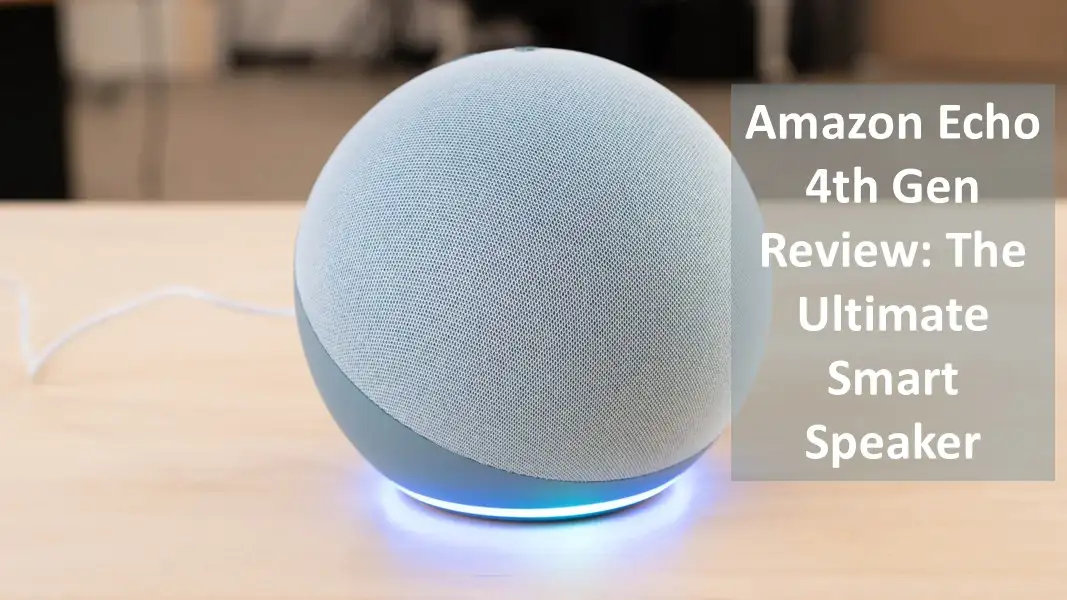
If you’re looking for an Amazon Echo 4th Gen review, you’re probably wondering whether this Alexa smart speaker is still worth buying in 2026 or if you should choose the Echo Pop, Echo Dot, Google Nest Audio, or Apple HomePod Mini instead. After analyzing its sound quality, smart home features, voice assistant performance, real user feedback, and competitors, here’s everything you need to know before buying.
Amazon Echo 4th Gen Review: Quick Verdict
Amazon Rating: 4.4/5
Best For: Smart-home beginners who want built-in Alexa, good sound, and a compact hub for Zigbee devices.
Skip If: You need audiophile-level sound, prefer Google Assistant, or want a completely privacy-free device.
Pros:
- Warm, balanced 360° audio for room listening.
- Built-in Zigbee hub simplifies smart-home setup.
- Sleek spherical design fits most interiors.
- Responsive Alexa with extensive skills and routines.
- Affordable compared with premium smart speakers.
Cons:
- Bass can be limited at high volumes; not for critical listening.
- No Matter support at launch (check firmware updates).
- Some privacy concerns for voice-activated devices.
- Limited multiroom flexibility compared with higher-end Echo models.
Verdict: The Echo (4th Gen) is the best-value all-in-one smart speaker for most users, excellent for casual music, seamless Alexa integration, and easy smart-home control. Pick it if you want a simple, stylish hub; skip it if you demand top-tier audio or a non-Alexa ecosystem.
Customer Amazon Echo 4th Gen Review Rating
| Stars (4.4/5) | Review (12,180 global ratings) |
| 5 Star | 67% |
| 4 Star | 21% |
| 3 Star | 6% |
| 2 Star | 1% |
| 1 Star | 5% |
Why Users Are Giving 4 & 5-Star Reviews
Most buyers are highly satisfied with the Amazon Echo (4th Gen) because of its excellent sound quality. Users frequently praise the rich bass, clear vocals, and room-filling audio, saying it performs far better than previous Echo models and even rivals dedicated Bluetooth speakers in its price range. Many also mention that it offers outstanding value when purchased during sales.
Another major reason for positive ratings is the premium design and build quality. The spherical design looks modern, feels sturdy, and blends well with home décor. Buyers also appreciate the easy integration with Alexa, making it simple to control smart lights, set reminders, play music, check the weather, and automate daily routines.
The voice recognition is another highlight. Most users say Alexa responds quickly and accurately to commands, even from across the room. Many also enjoy the companion app for setting up routines and connecting smart home devices. Once connected to Wi-Fi, reviewers describe the Echo as reliable, easy to use, and an excellent all-in-one smart speaker for music and home automation.
Why Users Are Giving Below 3-Star Reviews
Most lower-rated reviews focus on connectivity and software issues rather than sound quality. Several users experienced frequent Bluetooth disconnections while streaming music or watching movies, making playback frustrating. Some also found the Alexa app slow, unstable, and difficult to use during setup or while changing settings.
Another common complaint is inconsistent audio performance at higher volumes. While many praise the sound at moderate levels, some reviewers report noticeable distortion above 70–80% volume. These users feel the speaker is excellent for casual listening but less suitable for those expecting powerful, distortion-free music at maximum volume.
Compatibility issues also appear in several reviews. A few buyers struggled to connect the Echo with certain TVs or Bluetooth soundbars, while others found the initial Wi-Fi setup more complicated than expected. Some users also felt Alexa could not answer more advanced questions or expected more features from the companion app. Overall, negative reviews suggest the Echo (4th Gen) is an excellent smart speaker, but its software experience still leaves room for improvement.
Amazon Echo 4th Gen Design
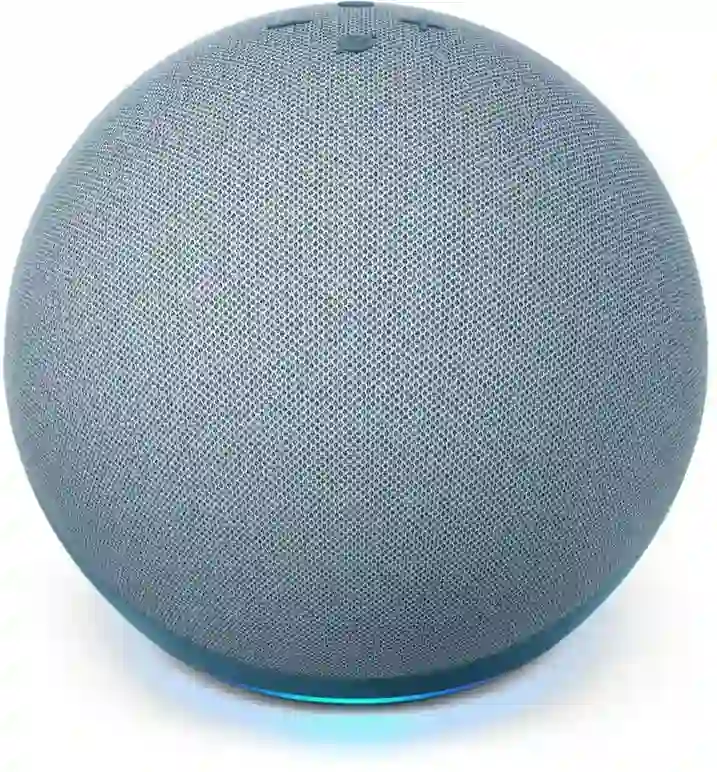
The Amazon Echo 4th Gen introduced a completely new look compared to earlier Echo speakers. Instead of the tall cylindrical design, Amazon opted for a compact spherical shape with fabric-covered design, giving it a more modern appearance that blends naturally into living rooms, bedrooms, kitchens, or home offices.
Measuring approximately 144 × 144 × 133 mm (5.7 × 5.7 × 5.2 inches) and weighing around 970 g, the Echo (4th Gen) is compact enough to sit comfortably on a bedside table, TV cabinet, bookshelf, or desk without occupying much space.
Build Quality
The Echo (4th Gen) feels well-made, with a durable plastic enclosure covered in high-quality fabric. The finish gives the speaker a clean, premium look that complements most home interiors while remaining understated.
The physical controls are conveniently located on the top of the speaker and include:
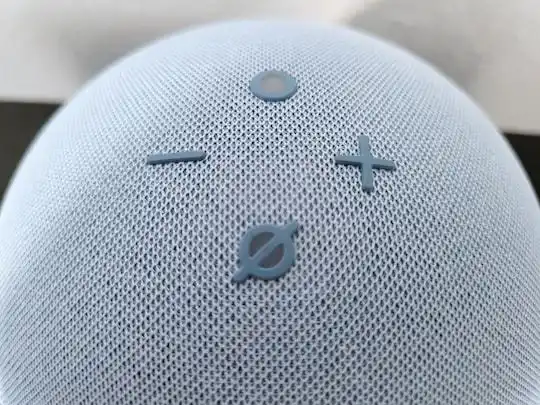
- Volume Up
- Volume Down
- Microphone Mute
- Action Button
Amazon also moved the signature LED light ring to the bottom of the speaker. The light gently reflects off the surface underneath, making Alexa notifications and status indicators easy to notice without being distracting.
Available Colors
The Echo (4th Gen) is available in three color options:
- Charcoal
- Glacier White
- Twilight Blue
Each finish uses the same fabric-covered design, allowing you to choose the option that best matches your home décor.
Rear Connectivity
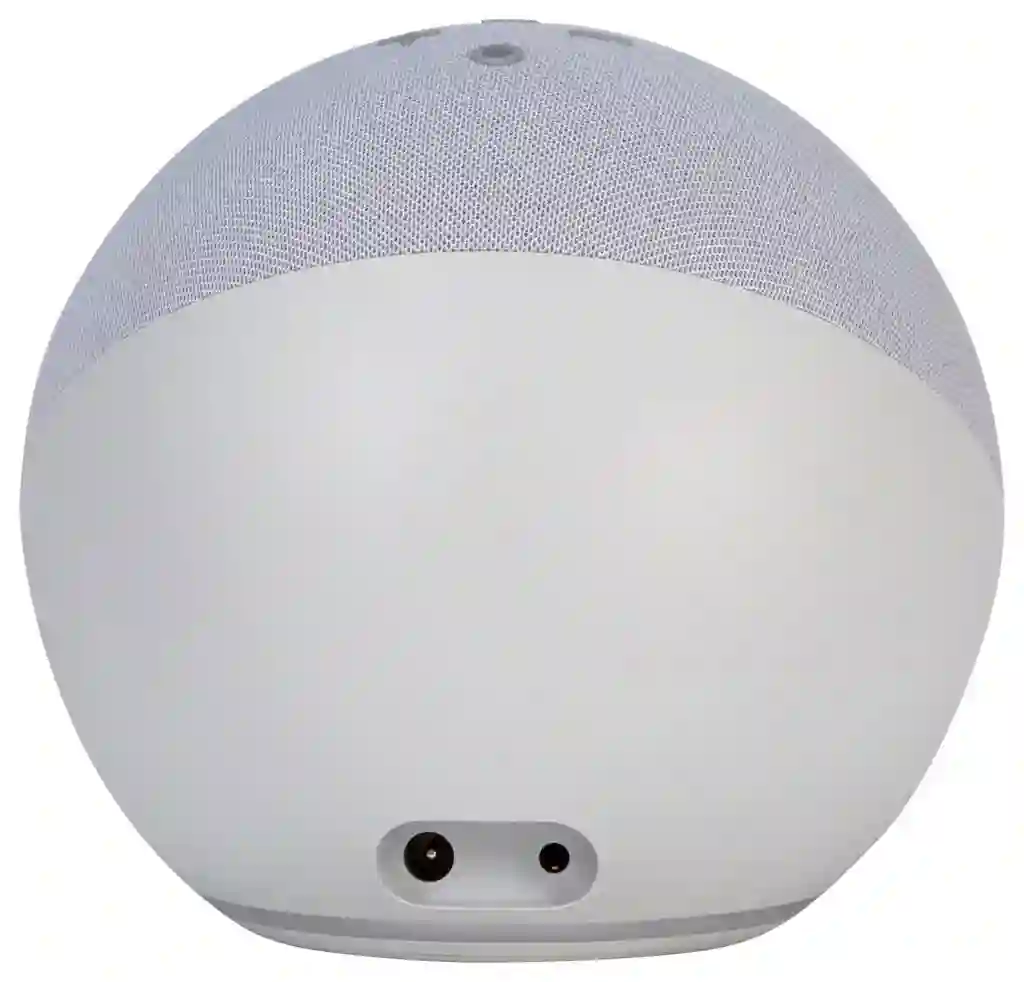
On the rear of the speaker, you’ll find:
- Power input
- 3.5 mm line in/out audio jack
The 3.5 mm audio port adds flexibility, allowing you to connect compatible external audio equipment using either line-in or line-out, depending on your setup.
Everyday Practicality
The spherical design isn’t just visually appealing, it also makes the speaker easy to place in different parts of the home. Whether it’s on a bedside table, kitchen counter, bookshelf, or office desk, the compact footprint fits neatly into most spaces while maintaining a clean, modern aesthetic.
Amazon Echo 4th Gen Audio Performance
Sound quality is one of the biggest reasons people choose the Amazon Echo (4th Gen) over smaller smart speakers. It delivers louder, fuller sound with noticeably stronger bass, making it a solid choice for everyday listening. Whether you’re streaming music, catching up on podcasts, or using Alexa throughout the day, it provides an enjoyable audio experience that’s well-balanced for its size.
Instead of trying to compete with premium hi-fi speakers, the Echo (4th Gen) focuses on delivering clear, room-filling sound that works well for most households.
Music Performance
For music, the Amazon Echo (4th Gen) performs surprisingly well. Songs sound lively with enough bass to add depth without making the overall sound feel muddy. Pop, acoustic tracks, playlists, and casual background music all sound enjoyable, making it a great everyday speaker.
While it won’t satisfy audiophiles looking for exceptional detail or studio-level accuracy, it offers more than enough performance for typical home listening.
Best for:
- Spotify and Amazon Music streaming
- Pop, acoustic, Bollywood, and casual playlists
- Everyday background listening
Movie Performance
If you occasionally watch movies or TV shows, the Echo (4th Gen) delivers clear dialogue and enough bass to make action scenes feel more engaging than standard TV speakers.
However, it isn’t designed to replace a dedicated soundbar or home theater system. It lacks the surround sound and cinematic depth needed for an immersive movie experience.
Best for:
- Casual TV watching
- Streaming movies in bedrooms or small rooms
- Everyday entertainment
Podcast & Voice Performance
Podcasts and spoken content are where the Echo (4th Gen) truly shines. Voices sound natural, clear, and easy to understand, making long listening sessions comfortable.
Whether you’re listening to news, audiobooks, educational content, or using Alexa throughout the day, speech remains clear without requiring high volume levels.
Ideal for:
- Podcasts
- Audiobooks
- News briefings
- Alexa voice responses
Bass Performance
Bass is one of the Echo (4th Gen)’s strongest qualities. It delivers noticeably more low-end impact than smaller Echo speakers, giving music and movies a fuller, richer sound.
At normal listening levels, the bass feels punchy and satisfying. At very high volumes, however, it can become slightly boomy, so it sounds best within its everyday listening range.
Voice Clarity
Voice clarity is consistently good for daily use. Dialogue, podcasts, and Alexa responses remain easy to hear, even when there’s background noise in the room.
Although premium speakers reproduce vocals with greater refinement, the Echo (4th Gen) offers more than enough clarity for most users.
Volume Performance
The Echo (4th Gen) easily fills a small or medium-sized room with sound. It reaches high enough volumes for everyday use while maintaining good overall balance.
When pushed close to maximum volume, the sound begins to lose a little openness, but for normal listening levels it remains clean and enjoyable.
Recommended room sizes:
- Bedroom
- Office
- Kitchen
- Small to medium living room
Stereo Pair Performance
If you want a wider soundstage and more immersive music playback, pairing two Echo (4th Gen) speakers makes a noticeable difference.
Stereo pairing creates better left-right separation, making music sound more spacious and natural than using a single speaker. It’s an excellent upgrade for larger rooms or anyone who listens to music regularly.
Best Use Cases
| Use Case | Performance |
|---|---|
| Music Streaming | ⭐⭐⭐⭐☆ Excellent everyday listening with strong bass and balanced sound. |
| Podcasts & Audiobooks | ⭐⭐⭐⭐⭐ Clear voices make spoken content enjoyable. |
| Movies & TV | ⭐⭐⭐☆☆ Good for casual viewing but not a replacement for a soundbar. |
| Bedroom | ⭐⭐⭐⭐⭐ Excellent fit for everyday entertainment. |
| Office | ⭐⭐⭐⭐⭐ Great for background music, meetings, and Alexa commands. |
| Kitchen | ⭐⭐⭐⭐☆ Loud enough to overcome everyday household noise. |
| Party Use | ⭐⭐⭐☆☆ Better with a stereo pair; a single speaker is best for smaller gatherings. |
Smart Home Performance
The Amazon Echo (4th Gen) works very well as a smart home hub because it combines Alexa control with built-in Zigbee support, Matter support, and Thread border router capability. Amazon’s developer documentation lists the Echo (4th Gen) among devices that support Matter and explicitly says it has a built-in Thread border router, which makes it more capable than smaller Echo models for connected-home setups.
It is a strong match for homes that use Philips Hue, SmartThings, Ring, TP-Link Kasa, and other Alexa-compatible products, because Alexa supports major smart home protocols and the Echo (4th Gen) can manage a wide range of connected devices through the Alexa ecosystem. Philips Hue is specifically mentioned by Amazon as a partner for Matter-based Alexa integration, and Amazon notes broad protocol support across Wi-Fi, Zigbee, BLE Mesh, Matter, and Thread.
Voice control is one of its biggest strengths: lights, plugs, thermostats, locks, and routines can usually be controlled reliably through Alexa commands, especially when the devices are already paired correctly in the app. The Echo (4th Gen) is also better suited to this role than an Echo Dot because the Dot models do not include the same built-in Zigbee hub and Thread border router support.community.smartthings+1
Setup is generally straightforward in the Alexa app, and Amazon highlights Frustration-Free Setup and local Matter connectivity as part of its smart home experience. In practice, that means adding supported devices is easier than on older Echo models, and managing scenes, routines, and room-based device groups is more convenient once everything is linked.
The main limitation is that not every smart home standard is handled the same way. The Echo (4th Gen) supports Zigbee and Thread border routing, but some advanced setups still depend on the brand’s own bridge or app, and compatibility can vary by device generation and region. Also, if you only need basic voice control for a few smart plugs or lights, an Echo Dot may be cheaper and sufficient.
Setup Experience
Setting up the Amazon Echo (4th Gen) is generally quick and beginner-friendly. In most cases, the process takes only a few minutes: plug in the device, wait for the orange light ring, open the Alexa app, and follow the on-screen prompts to connect it to Wi-Fi.
The official Alexa setup flow uses the Alexa app to find the Echo, connect it to your home Wi-Fi network, and finish device registration. Amazon’s help guidance also shows that you can later change the Wi-Fi network from inside the Alexa app through Devices > Echo & Alexa > your device > Wi-Fi Network > Change.
For Bluetooth, the Echo (4th Gen) can be used as a Bluetooth speaker after setup, but Bluetooth is not the main setup method for getting the device online; Wi-Fi remains the primary connection for Alexa features and smart home control. If you are writing the article, it is better to mention Bluetooth as an extra connection option rather than part of the core setup flow.
The microphones are part of what makes setup and daily use easy, because Alexa responds to voice commands reliably once the device is connected. That said, microphone quality is more of a performance topic than a setup step, so it fits better as a short note about how well the Echo hears commands after installation. For more info refer to the official Amazon Echo 4 user manual
Who Should Buy the Amazon Echo (4th Gen)?
Best For
- Alexa users: If you’re already using Alexa devices, the Amazon Echo (4th Gen) is one of the best smart speakers for expanding your Amazon ecosystem with seamless voice control and automation.
- Smart home enthusiasts: The Echo (4th Gen) works as a powerful smart home hub, supporting Zigbee, Matter, and Thread devices. It’s ideal for controlling smart lights, plugs, locks, thermostats, and routines with simple voice commands.
- Music lovers: Thanks to its improved speaker design, the Amazon Echo 4th Gen delivers fuller bass, clearer vocals, and room-filling sound that’s noticeably better than the Echo Dot.
- Bedroom setup: Its compact design, responsive Alexa voice assistant, and excellent alarm, timer, and music features make it a great bedside smart speaker.
- Living room entertainment: Whether you’re streaming music, listening to podcasts, controlling your TV, or managing smart devices, the Echo (4th Gen) fits naturally into most living room setups.
- Students and professionals: Perfect for reminders, calendars, study playlists, weather updates, hands-free calling, and daily productivity in dorm rooms, apartments, or home offices.
Skip If
- You want a Dolby Atmos home theater speaker: While the Echo (4th Gen) offers impressive sound for its size, it isn’t designed to replace a dedicated Dolby Atmos soundbar or surround sound system.
- You need a portable Bluetooth speaker: The Echo (4th Gen) requires continuous power and isn’t designed for outdoor or battery-powered use.
- You’re deeply invested in the Apple ecosystem: If you primarily use HomeKit, Siri, and Apple HomePod devices, you’ll likely get a more integrated experience within Apple’s ecosystem.
- You’re an audiophile: Although the Echo (4th Gen) sounds excellent for everyday music listening, serious listeners seeking reference-grade audio quality should consider premium Hi-Fi speakers instead.
Click on the link to learn more about top Alexa enabled speakers
Connectivity & Setup
The Amazon Echo 4th Gen has been designed to fit into any smart home environment easily and get set up. Therefore, the Echo smart speaker comes with versatile connectivity options that include a 3.5mm audio jack for wired connections to external speakers, Bluetooth 5.0 for wireless pairing of devices such as smartphones or tablets, and Wi-Fi for full functionality of Alexa.
The process of getting Amazon Echo 4th Gen set up is easy through the Alexa app, which even guides you through the step of connecting to your Wi-Fi and linking your Amazon account, followed by setting up various settings. The Alexa app also supports connection with other Alexa-compatible smart home devices, making product integration, like smart bulbs, thermostats, and much more, very smooth.
The Echo smart speaker supports multi-room audio, customizable sound settings, and routines, all easily managed through the Alexa app. If you have any technical problem with the device you can do a factory reset of Amazon Echo 4th gen
Amazon Echo (4th Gen) vs Competitors
If you’re considering the Amazon Echo (4th Gen), you’re probably also comparing it with other popular smart speakers. While each speaker excels in different areas, the right choice depends on your budget, preferred ecosystem, and how you plan to use it. Here’s a quick comparison to help you decide.
| Speaker | Best For | Smart Assistant | Smart Home Features | Verdict |
|---|---|---|---|---|
| Amazon Echo (4th Gen) | Best all-round smart speaker | Alexa | Built-in Zigbee hub, Matter support | Best balance of sound, smart features, and value. |
| Echo Dot (5th Gen) | Budget buyers | Alexa | Matter support | Great for voice control and smaller rooms, but doesn’t match the Echo (4th Gen)’s audio performance. |
| Google Nest Audio | Google ecosystem users | Google Assistant | Google Home & Matter compatibility | A strong choice if you already use Google services and devices. |
| Echo Studio | Music enthusiasts | Alexa | Zigbee hub, Matter support | Designed for users who prioritize premium audio and room-filling sound. |
| Apple HomePod mini | Apple ecosystem users | Siri | HomeKit & Matter support | Ideal for iPhone, iPad, and Apple Home users looking for seamless integration. |
Amazon Echo (4th Gen) vs Echo Dot (5th Gen)
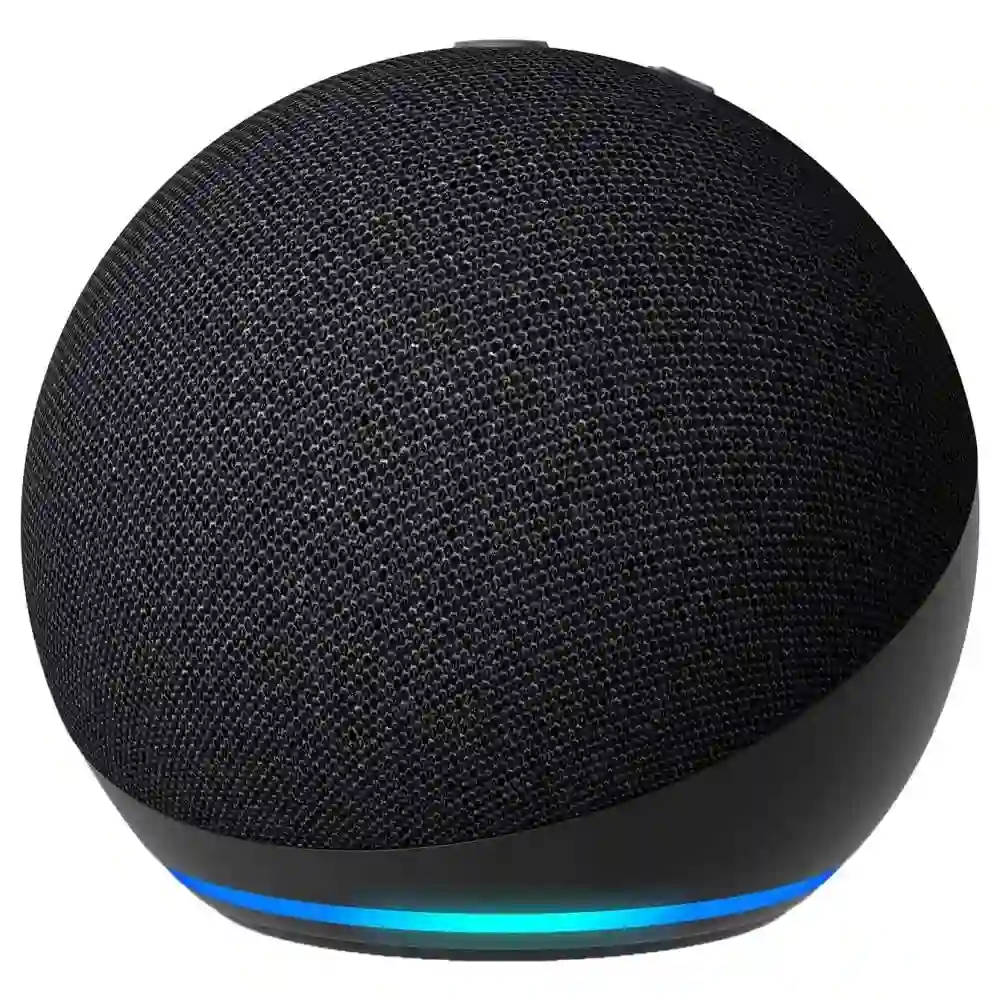
Both speakers offer the same Alexa experience, but the Echo (4th Gen) delivers noticeably better sound. Its larger woofer and dual tweeters produce deeper bass, higher volume, and a wider soundstage, making it a much better choice for music and movies.
The Echo Dot (5th Gen) is better suited for bedrooms, offices, or users who mainly want Alexa for reminders, smart home control, and everyday voice commands.
Choose the Echo (4th Gen) if you:
- Listen to music regularly.
- Want richer, room-filling sound.
- Plan to build a smart home with a built-in Zigbee hub.
Choose the Echo Dot (5th Gen) if you:
- Want an affordable Alexa speaker.
- Mainly use voice commands and smart home controls.
- Need a speaker for a smaller room.
Amazon Echo (4th Gen) vs Google Nest Audio
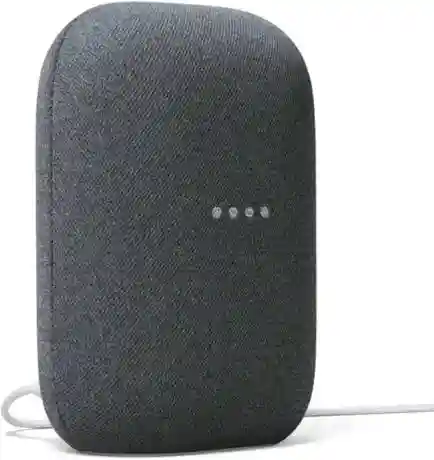
The Echo (4th Gen) and Google Nest Audio are both excellent mid-range smart speakers, but they fit different ecosystems.
The Echo (4th Gen) is a better choice if you already use Alexa-compatible smart home devices or want a built-in Zigbee hub for compatible accessories. Google Nest Audio integrates naturally with Google Assistant, Google Home, and other Google services, making it ideal for Android and Google-centric households.
For music, both speakers perform well, although many users prefer the Echo (4th Gen)’s fuller bass, while the Nest Audio is often praised for its balanced vocals.
Amazon Echo (4th Gen) vs Echo Studio
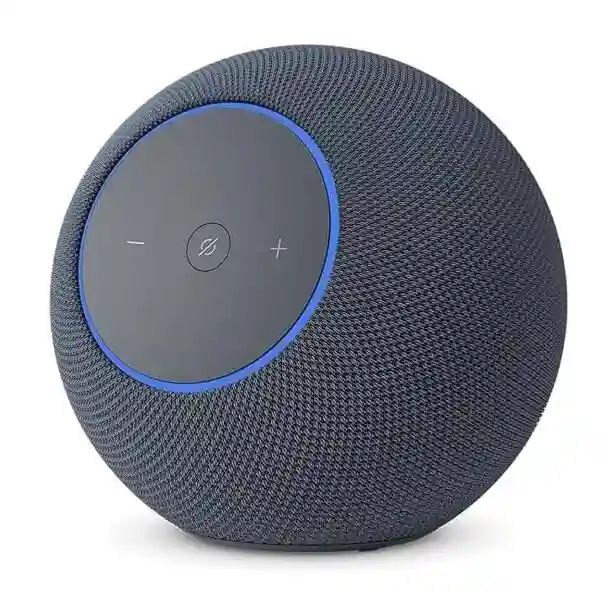
The Echo Studio is Amazon’s premium smart speaker, designed primarily for users who want the best possible sound quality.
Compared to the Echo (4th Gen), it delivers more powerful bass, greater detail, and a larger soundstage thanks to its more advanced speaker array. However, it also comes at a significantly higher price.
If your priority is premium music playback, the Echo Studio is the better option. For most users looking for a combination of excellent sound, Alexa features, and smart home capabilities, the Echo (4th Gen) offers better overall value.
Amazon Echo (4th Gen) vs Apple HomePod mini
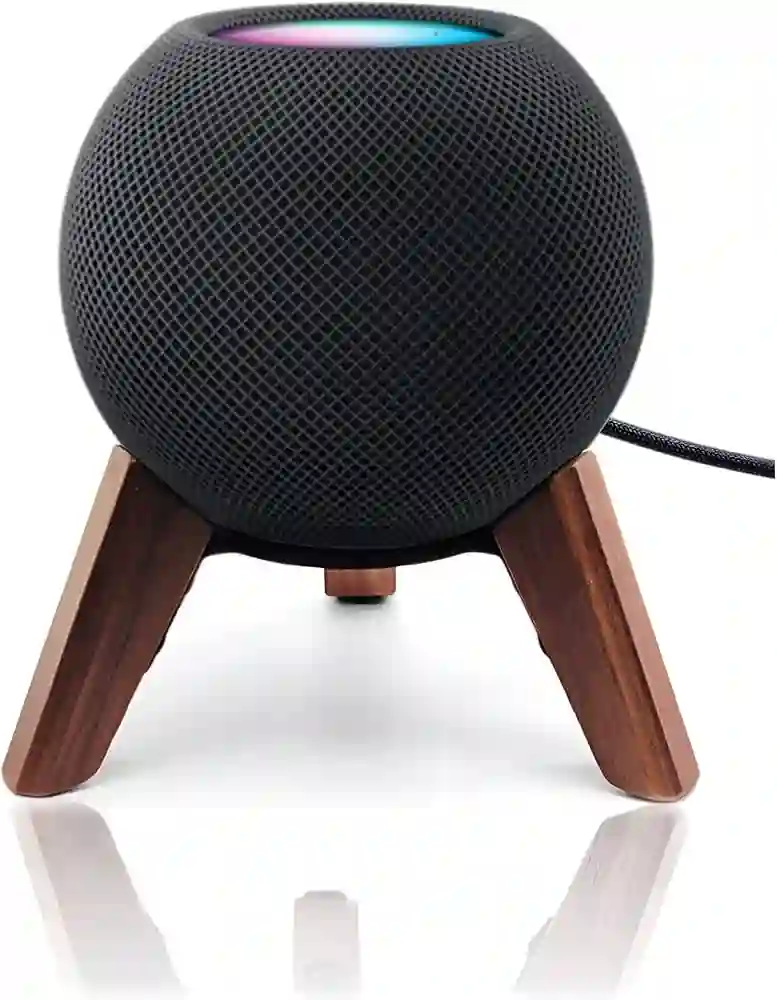
The HomePod mini is the natural choice for users already invested in Apple’s ecosystem. It works seamlessly with HomeKit, Siri, and Apple devices, making everyday tasks effortless for iPhone and iPad users.
The Echo (4th Gen), on the other hand, offers larger, more powerful sound and broader compatibility within the Alexa smart home ecosystem. If you aren’t committed to Apple products, the Echo (4th Gen) is generally the more versatile option.
Which One Should You Buy?
| If you want… | Recommended Speaker |
|---|---|
| Best overall smart speaker | Amazon Echo (4th Gen) |
| Best budget Alexa speaker | Echo Dot (5th Gen) |
| Best for Google users | Google Nest Audio |
| Best sound quality for music | Echo Studio |
| Best for Apple users | HomePod mini |
Conclusion
If you mainly want the smartest speaker under $100 with excellent Alexa integration and strong bass, the Echo 4th Gen remains one of the best choices even today. However, if music quality is your top priority or you’re heavily invested in Apple’s ecosystem, alternatives like the Echo Studio or HomePod Mini may suit you better.