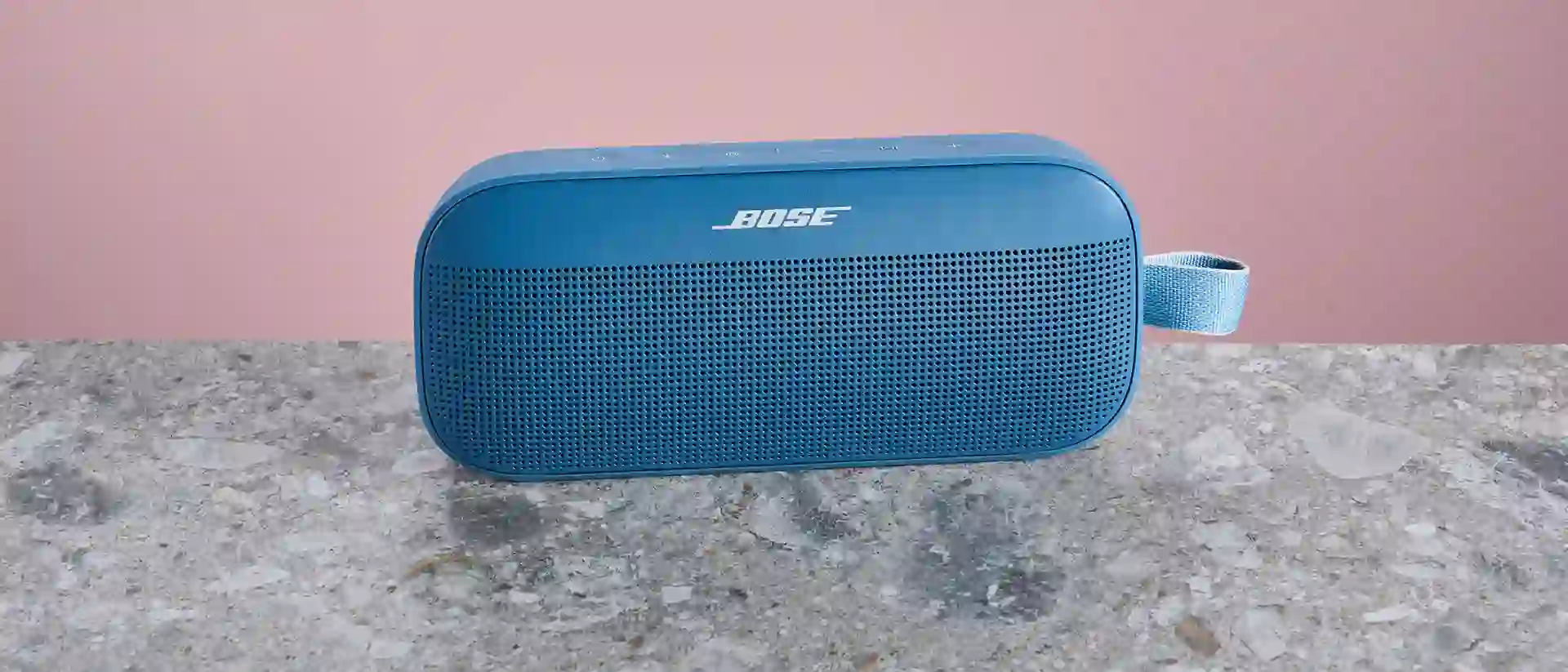
We review the Bose SoundLink Flex 2 review to help you decide whether this rugged portable Bluetooth speaker fits your life. The SoundLink Flex 2 is aimed at people who spend time outdoors or move between home and travel and want a compact speaker that sounds better than its size suggests. Strengths include a tough IP67-rated body that floats, orientation-aware PositionIQ tuning, clear mids and surprisingly strong bass for a small speaker, and Bluetooth 5.3 with multipoint and app-based custom EQ.
Limitations to consider are battery life that can fall short of the advertised 12 hours in real use, a USB-C port that only charges, and the fact that this generation is more of a refinement than a dramatic redesign.
In this review we cover whether it is worth buying the Bose SoundLink Flex 2? Where it falls short, who should buy it, and practical setup and tuning advice. Expect clear comparisons with likely alternatives, real-world performance guidance for music, movies, and outdoor use, and recommendations for the Best Sound Setting For Bose SoundLink Flex 2 so you get usable sound quickly.
Bose SoundLink Flex 2 Review: Quick Verdict
Best For
People who want a compact, rugged Bluetooth speaker that sounds balanced with punchy bass and works well outdoors.
Not Ideal For
Users who need very long battery life, wired audio connections, or immersive home theater sound.
Top Strengths
Durable IP67 build that floats, PositionIQ placement-aware tuning, app EQ and stereo linking, clear mids and strong bass for the size.
Biggest Weaknesses
Battery life often shorter than the 12-hour claim, USB-C charging-only port, modest upgrade over the prior model.
Bottom Line
The Bose SoundLink Flex 2 review shows a well-built portable speaker that leans on reliable tuning and practical features. It is an attractive buy if portability, weather resistance, and simple tuning matter more than every extra hour of battery life.
Product Overview
The Bose SoundLink Flex (2nd Gen) sits in the rugged portable Bluetooth speaker category. Its main highlights are an IP67-rated chassis that reportedly floats, PositionIQ orientation-aware tuning that adapts to how the speaker is placed, Bluetooth 5.3 with multipoint support, and app-controlled custom EQ plus a programmable Shortcut button. Market positioning targets outdoor users and people who want a premium-feeling portable speaker with a small footprint. The intended audience is buyers who prioritize build quality, portability, and the convenience of app-based tuning over raw power or wired connectivity.
Bose SoundLink Flex 2 Specifications
| Specification | Value |
|---|---|
| Channels | Single unit, stereo pairing supported |
| Connectivity | Bluetooth 5.3, USB-C charging only |
| Water and Dust Protection | IP67 |
| Placement Sensing | PositionIQ orientation-aware tuning |
| App Support | Bose Music app for EQ, linking, and updates |
| Voice Features | Built-in microphone for calls; Shortcut button can trigger phone voice assistant |
| Dimensions | 2.06 in H x 7.93 in W x 3.56 in D |
| Weight | 1.291 lb |
| Party and Stereo Modes | Stereo Mode, Party Mode, SimpleSync linking supported |
Why These Specifications Matter
We know the specs that matter for a portable speaker are portability, connectivity, durability, and how easy the sound is to shape. Bluetooth 5.3 and multipoint make switching devices smoother when moving between phone and laptop. IP67 and the floating capability let the speaker live at the pool, beach, or campsite without constant worry. PositionIQ takes the guesswork out of placement so the speaker sounds more consistent whether set upright, laid flat, or hung. The Bose app and Shortcut button let us tune or call up functions without wrestling with phone menus. Finally, dimensions and weight make it genuinely portable for backpacks and day trips.
Key Features Explained
PositionIQ automatically senses whether the speaker is standing, lying on its side, or hanging and adjusts the tuning to match. That matters because small speakers can sound thin or off-balance if the drivers are pointed away from listeners. PositionIQ helps keep vocals and instruments clear without manual equalizer fiddling. It is most useful for active outdoor users who frequently change how the speaker is placed.
The Shortcut button is a small but practical convenience. It can be programmed to do things like trigger a voice assistant on your phone or begin linking speakers for Stereo or Party Mode. If you are often outdoors with limited phone access, this button speeds up common tasks and reduces the number of taps needed.
Bluetooth 5.3 and multipoint support reduce reconnection hassle. When two devices are paired simultaneously, shifting playback from phone to laptop or another phone is simpler. This helps when multiple people share playback duty at a gathering or when moving between devices while working.
App-based custom EQ in the Bose Music app gives hands-on control over bass and treble. For users who like to tailor the sound for genres or for placement—boosting bass outdoors or lowering low end for clearer dialogue—the app provides flexible adjustments. This feature is a meaningful improvement because it empowers listeners to fix tuning that feels too bass-forward or too thin.
IP67 water and dust resistance with the reported ability to float lets the speaker survive poolside use and the occasional dunk. That gives confidence when using the speaker near water or in dusty environments. It is a core selling point for anyone buying a speaker primarily for outdoor use.
Stereo Mode, Party Mode, and SimpleSync let one or more units be linked for wider coverage. Using two units in stereo significantly widens the soundstage compared to a single speaker, and Party Mode lets multiple Bose devices play the same audio. These features are valuable if parties or covering larger outdoor areas are part of the intended use.
Limitations to note: the USB-C port is only for charging so wired audio via USB is not an option. Battery life in real-world tests often falls short of the marketing claim, so plan for backups on long outings.
Who Should Buy This?
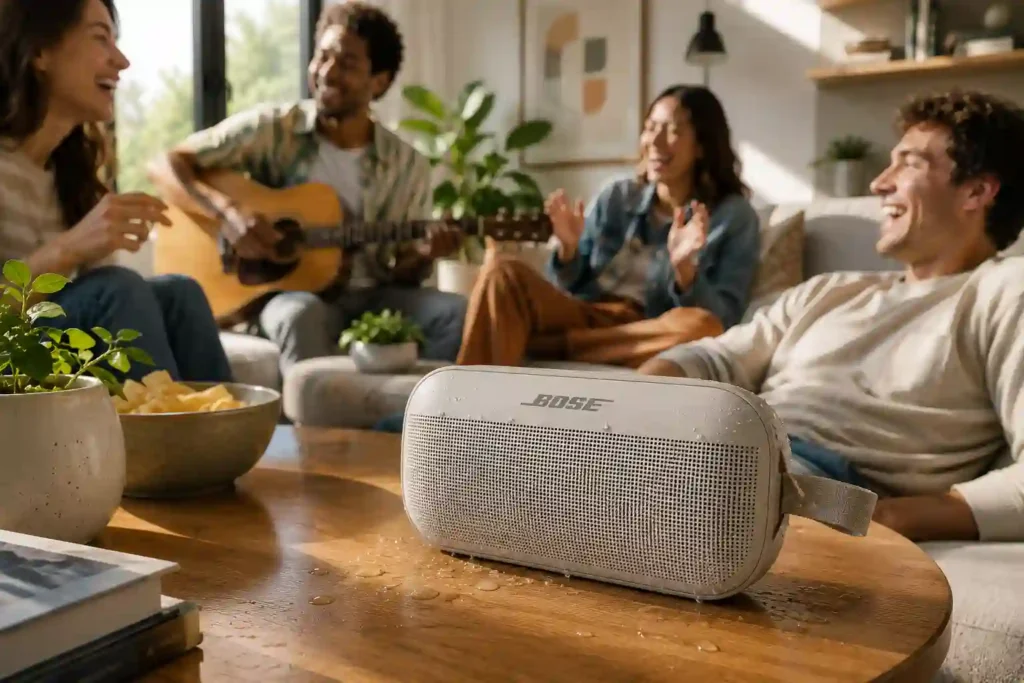
Ideal Buyers
Buyers who want a compact, rugged Bluetooth speaker that delivers clear mids and satisfying bass for its size, and who value placement-aware tuning and app EQ.
Who Should Avoid It
People who need very long battery life, a wired audio input, or a speaker that replaces a home soundbar for cinematic impact.
Best Use Cases
Day trips, poolside, beach use, backyard gatherings, and small-room listening where portability and durability are priorities.
Less Suitable Use Cases
Large indoor parties without multiple linked units, long multi-day outings without access to charging, or users who need wired connections to legacy audio sources.
Design and Build Quality
We are looking at a compact speaker that feels sturdy. The body uses a mix of materials including aluminum, fabric, nylon, plastic, silicone, and steel. It has a premium tactile feel and a rugged aesthetic that matches its outdoor intent. Color choices cover neutral and outdoor-friendly tones.
Durability is a headline feature. The IP67 rating means it resists dust and can survive immersion in water to a defined limit. Reviewers also note flotation, which makes it safer poolside than most compact speakers. The silicone-wrapped body and robust materials keep it from feeling fragile when tossed into a bag or left outside.
Practical placement considerations tie back to PositionIQ. The speaker performs well upright on a table, horizontally on a picnic blanket, or hanging from a backpack strap. Because the tuning adapts, there is less need to hunt for an ideal orientation to get acceptable sound. The single-unit design is compact enough to stow in backpacks and small day bags.
One notable design limitation is the lack of a wired audio input. The USB-C connector only charges the speaker. For some users this removes a fallback option if Bluetooth is unavailable.
Setup and Installation
Setup is straightforward. Power the speaker on, enable Bluetooth pairing mode, and select the Bose SoundLink Flex on your phone or laptop. The Bose Music app can be used to finish setup, customize EQ presets, assign the Shortcut button, and manage pairing modes for Stereo or Party Mode.
The app also handles firmware updates and makes it easy to pair two units for stereo. Charging before first use is recommended. The lack of a wired audio option is often a point of confusion during setup, so note that USB-C is charging-only.
Real-world experience shows pairing is reliable and the multipoint Bluetooth makes switching between two devices simple. If you plan to link speakers, the app guides the process and reduces guesswork. Refer to the official user manual of Bose SoundLink Flex 2 for more information
Sound Performance
Movies and TV
For watching movies or streaming TV on a phone or tablet in near-field setups, the speaker delivers clear midrange and decent dialogue clarity. Vocals and spoken words are easy to follow at moderate volumes. Cinematic low-end impact is limited by the small drivers and lack of a subwoofer, so for big action scenes or rumbling effects a soundbar or larger speaker will be more satisfying. Stereo pairing improves the soundstage for wider scenes, but the single unit is still best for personal or small-room viewing.
Music Listening
Music is where the speaker shines relative to its size. Bose tuning emphasizes balanced mids, so vocals feel present and instruments separate cleanly. Bass is notable for a compact speaker and provides enjoyable punch for pop, electronic, and many modern genres. Sub-bass extension is naturally limited, so songs that rely on deep low frequencies will sound fuller on larger systems. Outdoors the speaker projects well and can fill a small group area with satisfying volume. Using the app EQ to increase bass outdoors or to tame low-end for vocal-heavy tracks helps dial in the right tone. PositionIQ helps maintain consistent tonal balance when the speaker is placed differently.
Gaming
For casual gaming on portable devices, the speaker provides good clarity and volume. Positional audio accuracy for competitive first-person shooters is not a core strength. Stereo pairing helps lateral cues but this device is not a gaming-focused low-latency solution. Latency is acceptable for video playback but not verified as optimized for high-frame-rate competitive gaming.
Voice Content and Podcasts
Podcasts and audiobooks come through clearly thanks to the midrange clarity. Slightly reducing bass in the app EQ can improve vocal focus if needed. For voice-based content the speaker is more than capable in near-field listening situations.
Indoor Use
In small rooms the speaker performs well for music and TV at moderate volumes. Its compact footprint and clear mids make it a fine choice for kitchens, bedrooms, and offices. For filling large rooms or achieving room-shaking bass, the Flex 2 will underperform compared with larger, dedicated home audio options.
Outdoor Use
Outdoor is a natural habitat for this speaker. The IP67 rating and floatation make it a worry-free choice at the pool, beach, or campsite. The sound projects well in open spaces for small groups, and PositionIQ helps keep the balance consistent when the speaker is placed on uneven surfaces or hung. Battery life limitations mean bringing a charger for long days is wise.
Overall Strengths and Weaknesses
Across these use cases the consistent themes are a durable, well-tuned speaker with surprising bass for its size and useful linking and app features. The recurring weaknesses are limited battery life in real-world tests and the inability to use wired audio as a fallback.
Best Settings
For movies preserve midrange clarity by avoiding bass-heavy EQ settings. If dialogue feels muddy, reduce the low frequencies in the app and slightly boost the 1–3 kHz band to bring voices forward. For music, increase bass using the Bose app when using the speaker outdoors or in open areas to add punch. Enable PositionIQ for automatic placement-aware tuning. For stereo listening, pair two units in Stereo Mode for a wider soundstage. These adjustments reflect common reviewer and user recommendations.
Amazon Customer Bose SoundLink Flex 2 Review Rating
| Stars (4.7/5) | Review (11,612 global ratings) |
| 5 Star | 84% |
| 4 Star | 12% |
| 3 Star | 2% |
| 2 Star | 1% |
| 1 Star | 1% |
Why Users Are Giving 4 & 5-Star Reviews
Users give the Bose SoundLink Flex 2 high ratings because of its exceptionally balanced sound quality. Many reviewers praise the speaker for producing clear vocals, detailed mids, crisp highs, and deep, controlled bass that enhances the music without overpowering it. Several users mention that it performs well across different genres, including Bollywood, classical, rock, pop, and EDM, making it a versatile speaker for everyday listening.
The premium build quality is another major reason for the positive feedback. Buyers appreciate its compact, rugged design, IP67 water and dust resistance, and portability for both indoor and outdoor use. Reliable Bluetooth connectivity, easy pairing, and customizable EQ settings also receive frequent praise. While some acknowledge that the speaker is priced higher than many competitors, they believe the audio performance, premium construction, and trusted Bose brand justify the investment. Overall, users consider the SoundLink Flex (2nd Gen) one of the best portable Bluetooth speakers available in its price range.
Why Users Are Giving Below 3-Star Reviews
Although negative reviews are relatively rare, users who give the Bose SoundLink Flex 2 lower ratings generally point to a few recurring concerns. Battery life is the most common complaint, with some buyers expecting longer playback from a speaker in this price segment. A few reviewers also feel that the premium price is difficult to justify because other brands offer similar sound quality at a lower cost.
Some users mention that the speaker focuses more on balanced audio than maximum loudness, making it less suitable for those who prefer extremely high volume or heavy bass. Others note that the sound can initially feel bass-heavy and may require some use before becoming more balanced. A handful of reviewers also compare it with competing speakers from brands like JBL and feel those models deliver greater volume output. Overall, lower ratings typically come from buyers seeking louder performance, longer battery life, or stronger value for money rather than questioning the speaker’s overall sound quality.
Connectivity and Smart Features
Bluetooth 5.3 and multipoint make the speaker easy to use with multiple devices. The Bose Music app provides EQ controls, linking for stereo and party modes, and handles firmware updates. There is no Wi-Fi support, so the speaker relies entirely on Bluetooth for streaming. There is no onboard voice assistant; however, the Shortcut button can trigger the voice assistant on your phone. The built-in microphone supports calls. These features make the speaker straightforward rather than smart-home integrated.
Common Problems and Troubleshooting
Battery life shorter than advertised is often due to real-world listening levels and heavy bass settings. A practical fix is to lower maximum volume, reduce bass in the app, or carry a charger for long outings. Confusion over USB-C arises because the port charges only; rely on Bluetooth for audio. Pairing multiple speakers can be unfamiliar at first; use the Bose app to manage Stereo Mode or Party Mode and follow the on-screen pairing steps for consistent results. Keeping the app and firmware up to date helps with connectivity and feature stability.
Competitor Comparisons
Bose SoundLink Flex (1st Gen)
We see the Gen 2 as an incremental upgrade over the first generation. Choose the SoundLink Flex 2 if you want Bluetooth 5.3, the Shortcut button, and app-based EQ. If you already own the original and battery performance and features meet your needs, the upgrade may feel modest.
JBL Flip 6
If portability and price sensitivity are top priorities, consider the JBL Flip 6 as an alternative. Choose the Bose SoundLink Flex 2 if build quality, position-aware tuning, and the Bose app experience are more important. Choose the JBL option if you prefer a different brand sound signature or ecosystem.
Ultimate Ears Boom 3
For buyers who want 360-degree dispersion and a long-standing rugged design, the UE Boom 3 is a contender. Choose the Flex 2 if you prefer focused stereo imaging, PositionIQ adjustments, and Bose tuning. Choose the Boom 3 if you prioritize all-around sound dispersion.
JBL Charge 5
If battery life and deeper low-end are critical, the JBL Charge 5 may be the better fit. Choose the SoundLink Flex 2 if you value a smaller footprint, orientation-aware tuning, and app EQ. Choose the Charge 5 for longer runtime and stronger low-frequency output.
Pros and Cons
Pros
- Durable IP67-rated build with flotation capability
- Clear, well-tuned sound with strong bass for its size
- PositionIQ placement-aware tuning and programmable Shortcut button
- Bluetooth 5.3 and multipoint for easy device switching
- Bose app with custom EQ and speaker linking features
Cons
- Real-world battery life often below the advertised 12 hours
- USB-C port is charging-only with no wired audio input
- Considered by some to be a modest upgrade over the previous generation
Availability and Value for Money
The SoundLink Flex 2 offers features that justify consideration from buyers who prioritize durability, portable sound quality, and convenience. PositionIQ, app EQ, and reliable Bluetooth connectivity add practical value. For those who require very long battery runtimes or wired connections, the Flex 2 is less compelling. Overall, it delivers a strong set of features for buyers whose main priorities are portability, outdoor readiness, and easy tuning.
Final Verdict
The Bose SoundLink Flex 2 review paints the picture of a rugged, well-tuned portable speaker that delivers balanced sound and user-friendly features. Its biggest strengths are the IP67-rated build with flotation, PositionIQ orientation-aware tuning, and the app-based EQ and linking features that make it versatile for outdoor and small-room use. The most significant weaknesses are real-world battery life that can be less than advertised and the lack of wired audio input.
For buyers who want a premium-feeling, portable speaker for outings, poolside music, or compact indoor listening, the Flex 2 is an attractive choice. For people who need long battery life, wired connections, or home-theater-grade sound, other options may suit better. Overall, the SoundLink Flex 2 is recommended for buyers who value durability, consistent tuning, and the convenience of app control.
How This Product Was Evaluated
We reviewed the speaker by examining specifications, feature lists, and common user feedback. The evaluation considered build quality, connectivity, app features, and real-world usage scenarios like music, movies, and outdoor use. Comparisons were made against common competitors to place the product in the market.
Is the Bose SoundLink Flex 2 waterproof ?
The speaker has an IP67 rating for water and dust resistance and reviewers report it floats.
How long does the Bose SoundLink Flex 2 battery last?
Bose advertises up to 12 hours. Independent tests and many user reports indicate real-world battery life can be shorter, especially at higher volumes.
Does the Bose SoundLink Flex 2 support stereo pairing?
Yes. Stereo Mode and Party Mode are supported to link two or more compatible Bose speakers.
Can the speaker be used with a wired connection?
No. The USB-C port is for charging only and there is no aux or USB audio input.
Does Bose SoundLink Flex 2 have a built in voice assistant?
There is no onboard voice assistant. The Shortcut button can trigger the voice assistant on a connected phone and the speaker includes a microphone for calls.
What Bluetooth version does Bose SoundLink Flex 2 use?
Bluetooth 5.3 is supported and multipoint pairing allows two devices to remain connected.
What is the Best Sound Setting For Bose SoundLink Flex 2?
Enable PositionIQ and use the Bose Music app to adjust EQ. For music outdoors boost bass; for movies and dialogue slightly reduce low frequencies and boost midrange around 1 to 3 kHz for clearer voices.