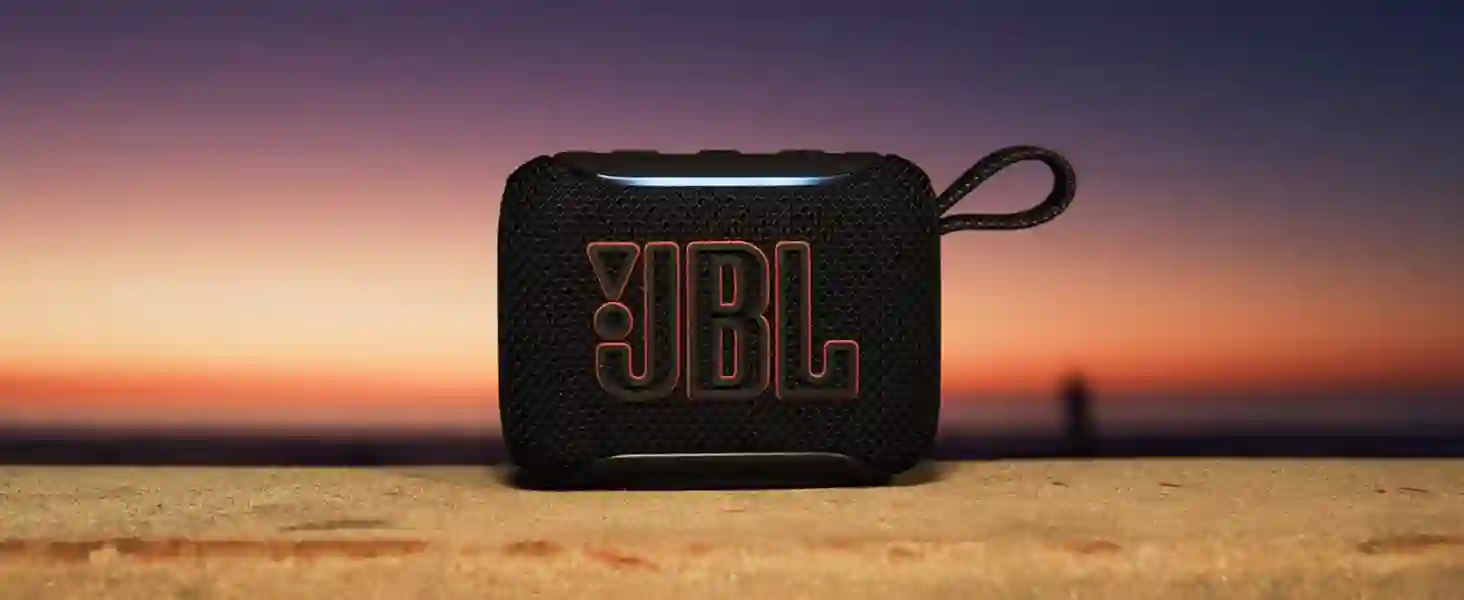
This JBL Go 5 review looks at a palm sized Bluetooth speaker built for travel and outdoor use. The Go 5 is an ultra portable Bluetooth speaker from JBL with modern connectivity and an IP68 rating that promises dust and water resistance alongside modest loudness and a surprising amount of bass for its size. The design targets people who want something pocketable for trips, pool days, and casual listening rather than a primary home audio solution.
In this review the main strengths are covered including Bluetooth 6.0 and LC3 codec support, USB C audio input, app based 7 band EQ, PlayTime Boost battery mode, and its rugged IP68 build. The main limitations are discussed too including limited low end below 100 Hz, mono output from a single 45 mm driver, and battery life that often falls short of lab claims when played loud. The article explains real world performance across movies, music, and outdoors and offers practical setup and best settings advice so a clear buying decision can be reached.
What follows includes a quick verdict, a compact spec table, feature explanations, who should buy this speaker, hands on performance notes, and a balanced final verdict that answers the common question IS IT WORTH BUYING JBL Go 5.
JBL Go 5 Review: Quick Verdict
Best For
People wanting a very small rugged speaker for travel and outdoor casual listening.
Not Ideal For
Those who need deep bass, long battery life at loud levels, speakerphone functions, or wired 3.5 mm AUX.
Top Strengths
Pocketable IP68 design, USB C wired audio, Bluetooth 6.0 with LC3, app based EQ that meaningfully improves sound.
Biggest Weaknesses
Limited low end below 100 Hz, mono single driver, real world battery life often below the official eight hour figure.
Bottom Line
This JBL Go 5 review finds the Go 5 a well rounded ultra portable speaker that improves on its predecessor in connectivity and usability while remaining limited by physics and size. It is an attractive purchase for anyone who wants a rugged pocket speaker with modern codecs and app EQ.
Product Overview
The JBL Go 5 sits in the ultra portable Bluetooth speaker category. Main highlights include a single 45 mm full range driver producing 4.8 watts RMS, Bluetooth 6.0 with SBC AAC and LC3 codecs, USB C charging and wired USB C audio input, and an IP68 dust and water resistance rating. The speaker uses the JBL Portable app for a 7 band EQ, lighting control, firmware updates, and pairing management. It is positioned as a small rugged companion rather than a high output party speaker and is aimed at buyers seeking portability, modern wireless features, and app based tuning.
JBL Go 5 Review Specifications
| Specification | Details |
|---|---|
| Channels | Mono |
| Total Output Power | 4.8 W RMS |
| Driver | 1 × 45 mm full range transducer |
| Frequency Response | 100 Hz – 19 kHz (–6 dB) |
| Bluetooth | Version 6.0 |
| Supported Codecs | SBC, AAC, LC3 |
| Profiles | A2DP v1.4, AVRCP v1.6 |
| Connectivity | Bluetooth, USB C charging and wired audio |
| Battery | Li ion 3.85 Wh (≈1000 mAh) |
| Playtime | Up to 8 hours (Light Effect off); PlayTime Boost can extend runtime |
| Charge Time | Approximately 3 hours at 5 V 1 A |
| Water Dust Rating | IP68 |
| Dimensions | 101 × 77.4 × 43 mm |
| Weight | 230 g |
| Package Contents | Speaker, USB C cable, Quick Start Guide |
Why These Specifications Matter
The mono channel and small 45 mm driver explain why the speaker stays compact and light but cannot produce deep sub bass or the volume headroom of larger speakers. The 100 Hz low frequency limit is the technical reason for modest bass. Bluetooth 6.0 and LC3 matter because they improve connection stability and efficiency when paired with compatible phones. USB C audio provides a reliable wired path for devices that need it. The IP68 rating matters for outdoor use and gives confidence at the pool or beach. Battery capacity and charge time determine how often the speaker needs topping up and explain the trade off between runtime and sound when using PlayTime Boost.
Key Features Explained
In JBL Go 5 review, we make it clear what the main features do and why they matter. Bluetooth 6.0 with LC3 offers a modern wireless link that can be more stable and efficient on compatible devices. For a portable speaker that will travel through pockets and backpacks, that improved pairing and reduced dropout risk matters.
USB C audio input is unusual in this size class and gives the option to connect devices without relying on Bluetooth. This helps when Bluetooth is unavailable or to avoid compression on some devices. The 7 band EQ in the JBL Portable app is a major practical feature. It lets the listener shape the sound so mids and bass sit better for different genres and for dialogue clarity on movies.
The IP68 dust and water resistance rating is a defining feature for outdoor use. It enables safe use near water and reduces worry about sand and accidental splashes. PlayTime Boost is a battery conservation mode that trades a degree of tonal fullness and maximum output for longer runtime. Practically this is useful for long days away from power but it is a compromise; the sound becomes thinner and less punchy. Stereo pairing and Auracast support expand flexibility. Two units can be paired for a wider stereo image, and Auracast or multi speaker pairing enables shared listening in compatible scenarios. Ambient edge lighting is decorative and app controlled; it does not change sound but adds visual flair for casual gatherings.
Each of these features benefits certain users. Travelers and outdoor fans will value IP68 and compactness. Tech conscious listeners will like LC3 and USB C. People who want the best possible single unit sound will be limited by the physical driver and enclosure.
Who Should Buy JBL Go 5?
Ideal Buyers
Those who want a true pocketable speaker for travel, outdoor days, and quick personal listening. Buyers who want modern wireless codecs and wired USB C audio in a compact form. Users who appreciate app EQ and firmware update support in a tiny package.
Who Should Avoid It
Anyone who needs deep, room filling bass, speakerphone capability, long high volume battery life, or an analog 3.5 mm AUX input. People seeking the loudest possible portable speaker or high fidelity stereo imaging from a single unit should look elsewhere.
Best Use Cases
Pocketable companion for travel and commuting. Poolside or beach use where IP68 matters. Near field listening for TV or laptop when clarity is the priority.
Less Suitable Use Cases
Main audio system for large rooms or parties. Primary gaming audio source where low latency and wide stereo imaging are required. A replacement for larger Bluetooth speakers when deep bass and high output are essential.
Design and Build Quality
This JBL Go 5 review finds the design straightforward and intentionally compact. The speaker is palm sized, lightweight, and covered with tactile materials. The grille and rubberized housing deliver a rugged feel that aligns with the IP68 rating. Multiple color finishes are available, giving options for personal taste.
The small form factor makes placement simple. It sits well on tables, counters, and backpacks. Because the grille must remain unobstructed for the best sound, keeping the speaker upright on a flat surface works best. There is no wall mount hardware and no built in microphone, which limits use as a hands free device.
Durability is a strong point. The IP68 rating provides confidence near water and in dusty outdoor conditions. Reviews describe it as solid and suitable for outdoor rough use. The trade off is obvious. A tiny enclosure and single driver keep weight and size down but limit bass and overall loudness compared with larger portable speakers.
Setup and Installation
Setup is straightforward in this JBL Go 5 review. Charge the speaker using the included USB C cable if needed. Power on the speaker and enable Bluetooth on the phone or source. Pairing is familiar and fast, and the JBL Portable app handles EQ, lighting, stereo pairing and firmware updates.
App setup is simple. Installing the JBL Portable app adds the 7 band EQ and lighting control plus firmware management. For wired playback plug a USB C cable between compatible source and the speaker. There is no 3.5 mm AUX port and no built in microphone to manage calls. Overall the experience is user friendly and closer to what has become standard for modern portable speakers. You can find detailed setup guide in the official user manula of JBL Go 5.
Sound Performance
Movies and TV
In this JBL Go 5 review, near field dialogue clarity is a strength. The mids are clear and vocal centric material comes through well for casual TV viewing or laptop video. For cinematic impact the Go 5 falls short. The 100 Hz low frequency limit and single driver mean explosions and deep bass effects lack weight. Stereo imaging is not available from one unit but pairing two Go 5 speakers improves left right separation.
Music Listening
Music sounds surprisingly punchy given the size. Vocals are expressive and mids are clear. The bass is improved compared with the previous generation yet remains constrained in depth and punch. For pop, acoustic, and vocal centric tracks the Go 5 performs well as a portable companion. Using the app based 7 band EQ makes the biggest perceived difference for music. A mild boost in the lower mids and careful treble control will produce fuller perceived bass and a clearer top end. PlayTime Boost will extend runtime but will thin the sound so disabling it yields better music quality.
Gaming
This JBL Go 5 review notes that the mono design and unknown real world latency make the speaker a poor choice as the main gaming audio device. Bluetooth 6.0 and LC3 can help latency on compatible devices but the speaker’s single driver and compact enclosure limit immersion and positional cues. For casual mobile gaming in a near field scenario it is acceptable, but competitive gaming benefits from headphones or larger stereo setups.
Voice Content and Podcasts
Podcast and spoken word benefit from the Go 5’s clear mids. For near field listening the speaker reproduces voices with intelligibility. For group listening in a larger room spoken content will lack the presence required to fill space convincingly.
Indoor Use
Indoors this speaker works best as a personal or near field device. It is excellent on a desk, kitchen counter or bedside table. It does not replace a larger Bluetooth speaker for parties or big living room playback. Stereo pairing two units helps expand the soundstage for small gatherings.
Outdoor Use
Outdoor is where the Go 5 shines as described in this JBL Go 5 REVIEW. The IP68 rating, compact size and weight make it an easy grab and go speaker for picnics, beaches and poolside. The rugged build reduces worry about dust and splashes. Loudness is adequate for small groups in close range but for open spaces or noisy environments the limited low end and maximum volume become apparent.
Overall Sound Character
Across these scenarios the speaker favors clear mids and treble with a tighter, controlled low end rather than deep sub bass. Users who accept the physical limits can get a lot from the Go 5 by using the app EQ and situational tweaks like stereo pairing or wired USB C input for slightly cleaner signal.
Best Settings
For music use the JBL Portable app and adjust the 7 band EQ to add a small lift in the lower mid area and to tame peaks in the upper treble. For movies and TV a neutral or vocal centered EQ improves dialogue clarity. PlayTime Boost is best reserved for when battery life is more important than tonal richness. For larger listening situations consider stereo pairing two units.
This section answers the practical search Best Sound Setting For JBL Go 5 by recommending custom EQ in the app and disabling PlayTime Boost when sound quality is the priority.
Amazon Customer JBL Go 5 Review Rating
| Stars (4.6/5) | Review (183 global ratings) |
| 5 Star | 83% |
| 4 Star | 9% |
| 3 Star | 3% |
| 2 Star | 1% |
| 1 Star | 4% |
Why Users Are Giving 4 & 5-Star Reviews
Most buyers are delighted with the JBL Go 5 because it delivers surprisingly powerful sound from such a compact speaker. We found that users consistently praise its clear vocals, punchy bass, and impressive volume, making it ideal for personal listening, travel, hiking, and small outdoor gatherings. Many reviewers also mention that the audio quality is noticeably better than previous Go models, especially when using the JBL Portable app to fine-tune the EQ.
Another reason for the high ratings is the speaker’s premium build quality and portability. We noticed that customers appreciate its rugged design, lightweight body, and durability for everyday use in different weather conditions. Bluetooth pairing is described as quick and reliable, while Auracast speaker pairing, customizable LED lighting, and long battery life add extra value. Overall, users believe the JBL Go 5 offers excellent performance for its size and price, making it one of the best ultra-portable Bluetooth speakers currently available.
Why Users Are Giving Below 3-Star Reviews
Although negative reviews are relatively uncommon, we identified several recurring complaints among less satisfied buyers. The most common issue is that the improvements over the JBL Go 4 feel minor. Some users expected a much bigger upgrade in sound quality and bass but felt the differences were too small to justify purchasing the newer model.
Another concern is the missing charging cable, which disappointed several buyers who expected one to be included in the box at this price. A few reviewers also describe the LED lighting as more of a novelty than a useful feature, saying it adds little to the overall experience. Others note that enabling Battery Saver mode noticeably reduces bass and overall sound quality. There are also isolated complaints about receiving the wrong color instead of the one ordered. Overall, lower ratings are mainly driven by unmet expectations, missing accessories, and limited improvements rather than poor audio performance or build quality.
Competitor Comparisons
JBL Go 4
When choosing between the two models the Go 5 is for those who want newer connectivity and slightly better protection. The Go 5 adds Bluetooth 6.0, USB C audio, IP68 instead of the previous rating, a 7 band EQ and PlayTime Boost. For buyers on a tighter budget the Go 4 remains a reasonable option but the Go 5 is the more modern pick.
Sony SRS XB100
If the decision is between the JBL Go 5 and the Sony SRS XB100 the Go 5 suits buyers who prioritize modern codecs and USB C wired audio in a compact form. Some users may prefer Sony tuning and brand alternative choices. Specific trade offs depend on personal taste and the desired feature mix.
Anker Soundcore 2
For those prioritizing long battery life the Anker Soundcore 2 typically advertises much longer runtime but it is larger. The Go 5 is better for those who need true pocketable size and IP68 protection plus USB C audio and LC3 support.
Bose SoundLink Micro
Buyers who want a premium small speaker with speakerphone capability may lean toward the Bose SoundLink Micro, but the Go 5 offers more modern codec support and USB C audio in a similarly portable package. The choice depends on priorities such as microphone features, brand preference and sound signature.
Pros and Cons
Pros
- Extremely portable pocket friendly IP68 rated rugged build with USB C audio and Bluetooth 6.0 and LC3 support app based 7 band EQ and firmware updates improved loudness and perceived bass versus the previous generation stereo pairing and Auracast capable for flexible setups
Cons
- Limited deep bass and headroom due to 100 Hz low limit mono single driver battery life can be shorter than the official up to eight hours at higher volumes no built in microphone no 3.5 mm AUX input PlayTime Boost reduces tonal fullness
Value for Money
At an approximate launch price in the US range of fifty to sixty dollars the JBL Go 5 review considers the speaker a strong value for buyers who prioritize portability, modern connectivity and ruggedness. The addition of USB C wired audio and a 7 band EQ adds tangible utility that justifies the premium over older generations for many shoppers. For budget buyers or those who prioritize maximum loudness or deep bass, larger or alternative models may offer better value depending on the use case.
Final Verdict
This JBL Go 5 review concludes that the Go 5 is an attractive ultra portable speaker that brings useful modern upgrades to a proven pocketable formula. Strengths include its IP68 ruggedness, USB C audio input, Bluetooth 6.0 with LC3, and a versatile app based 7 band EQ that helps compensate for small driver limits. Weaknesses are inherent in the form factor: limited low end below 100 Hz, modest real world battery life at loud volumes, and no microphone or analog AUX.
For travelers, outdoor users, and anyone who wants a compact speaker with modern connectivity the Go 5 is recommended. For those who need deep bass, long battery life at high volume, or hands free calling, other options should be considered. When asking IS IT WORTH BUYING JBL Go 5 the answer depends on priorities. If pocketability combined with app tuning and ruggedness matter most then the Go 5 is a good buy.
How This Product Was Evaluated
This review examined the official specifications including driver size output power frequency response battery and connectivity features. Key features and everyday use were evaluated by mapping specs to real world expectations and analyzing common reviewer impressions and reported trade offs. User experience themes and competitor positioning were considered to provide balanced guidance.
Is the JBL Go 5 waterproof?
Yes the speaker has an IP68 rating for water and dust resistance making it suitable for poolside or beach use.
How long does the JBL Go 5 battery last?
Official playtime is up to eight hours with light effects off. PlayTime Boost can extend runtime in exchange for reduced sound fullness. Real world runtime at moderate to loud volumes is often lower.
Does the JBL Go 5 support wired audio?
Yes the speaker supports USB C wired audio in addition to charging.
Can two JBL Go 5 units be paired for stereo?
Yes two units can be stereo paired using the JBL Portable app for left right separation.
Does the JBL Go 5 have a microphone for calls?
No the Go 5 does not include a built in microphone so it cannot be used as a speakerphone.
What Bluetooth codecs and version are supported by JBL Go 5?
Bluetooth 6.0 is supported along with SBC AAC and LC3 codecs.
Is it worth buying JBL Go 5?
For people who need a very compact rugged speaker with modern connectivity app EQ and optional wired USB C audio the Go 5 offers strong value. Buyers who need deep bass very high volume or built in call handling should consider other models.
What are the best sound setting for JBL Go 5?
Use the JBL Portable app 7 band EQ to boost lower mids modestly and adjust treble to taste. Disable PlayTime Boost for the fullest sound and enable it only when battery life is the priority. Pair two units for better stereo spread in larger listening scenarios.